


Prototype 2.0
Changes from Prototype 1.0
Fully enclosed pad → Pad with a removeable absorbent core
Backsitch + blanket stitch all the way around → Backtitch all the way around + small section of the blanket stitch
19 cm long absorbent core → 22cm long absorbent core
18 cm long wingspan → 15 cm long wingspan
The Process
1.
Selection of materials
Top outer shell: 2 layers of 100% cotton muslin baby blanket
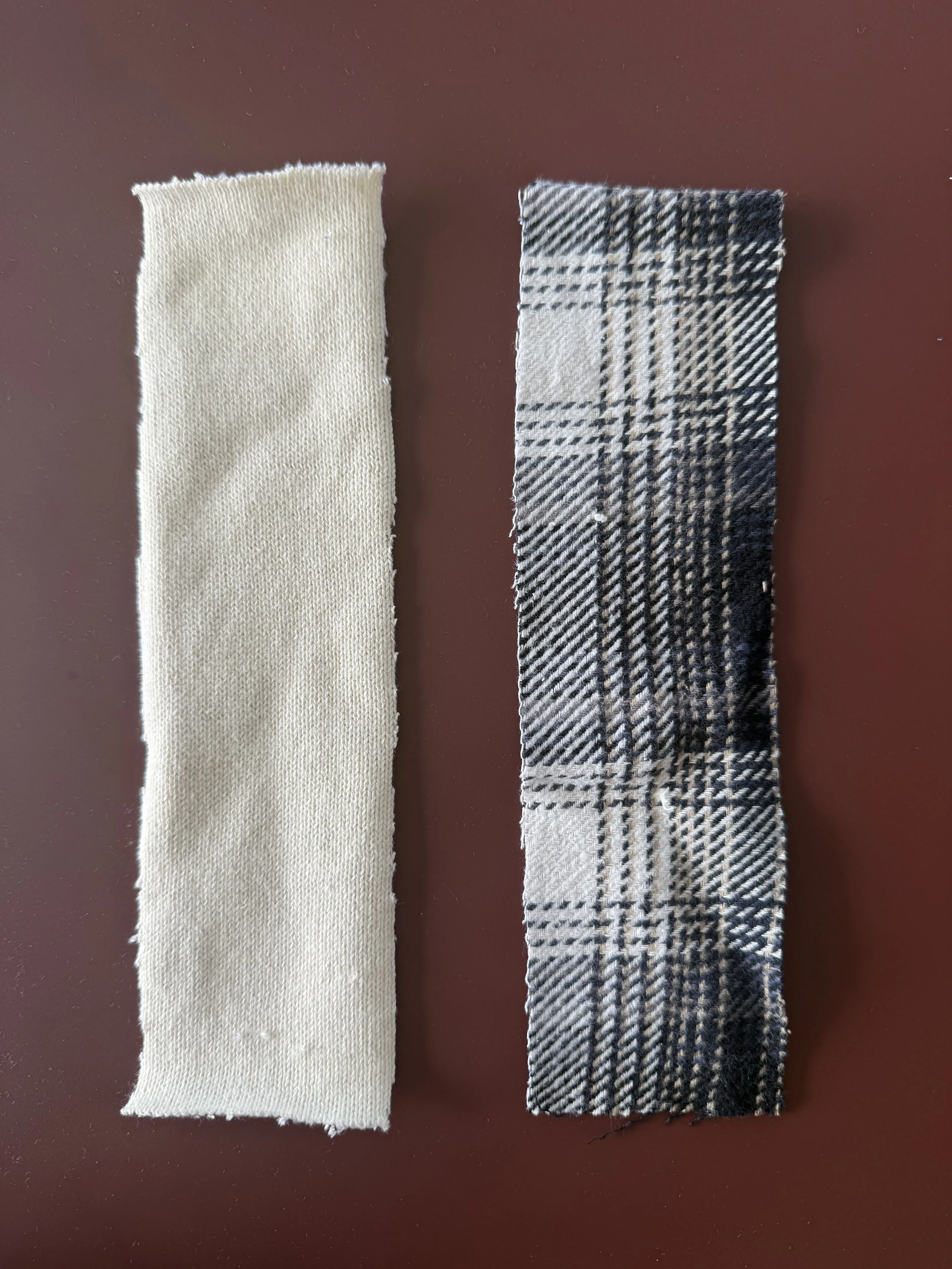
Absorbent core: 1 layer of 1o0% cotton flannel shirt , 1 layer of 100% cotton knit sweater
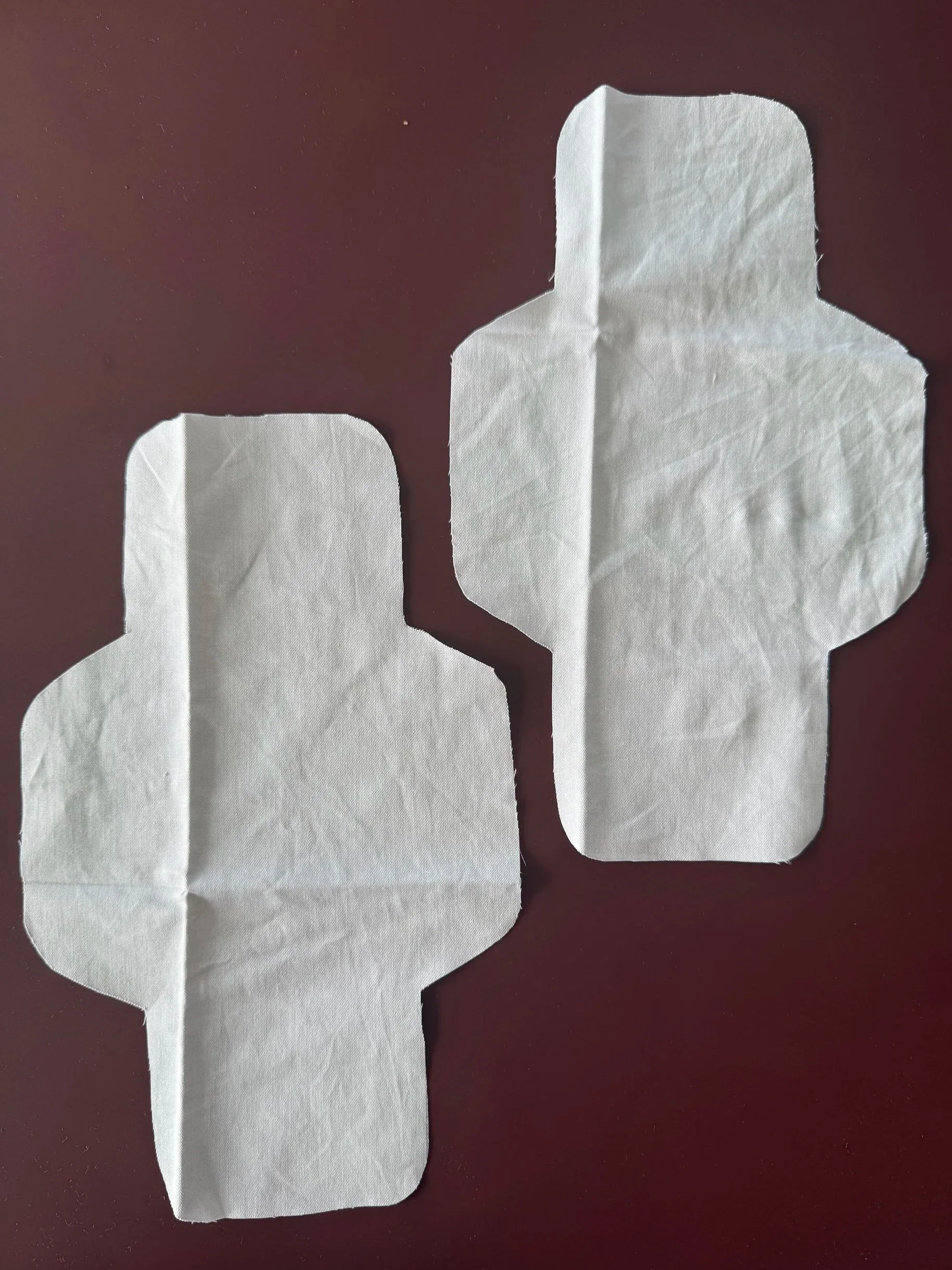
Bottom outer shell: 2 layers of 100% cotton dress shirt
2.
Creation of templates
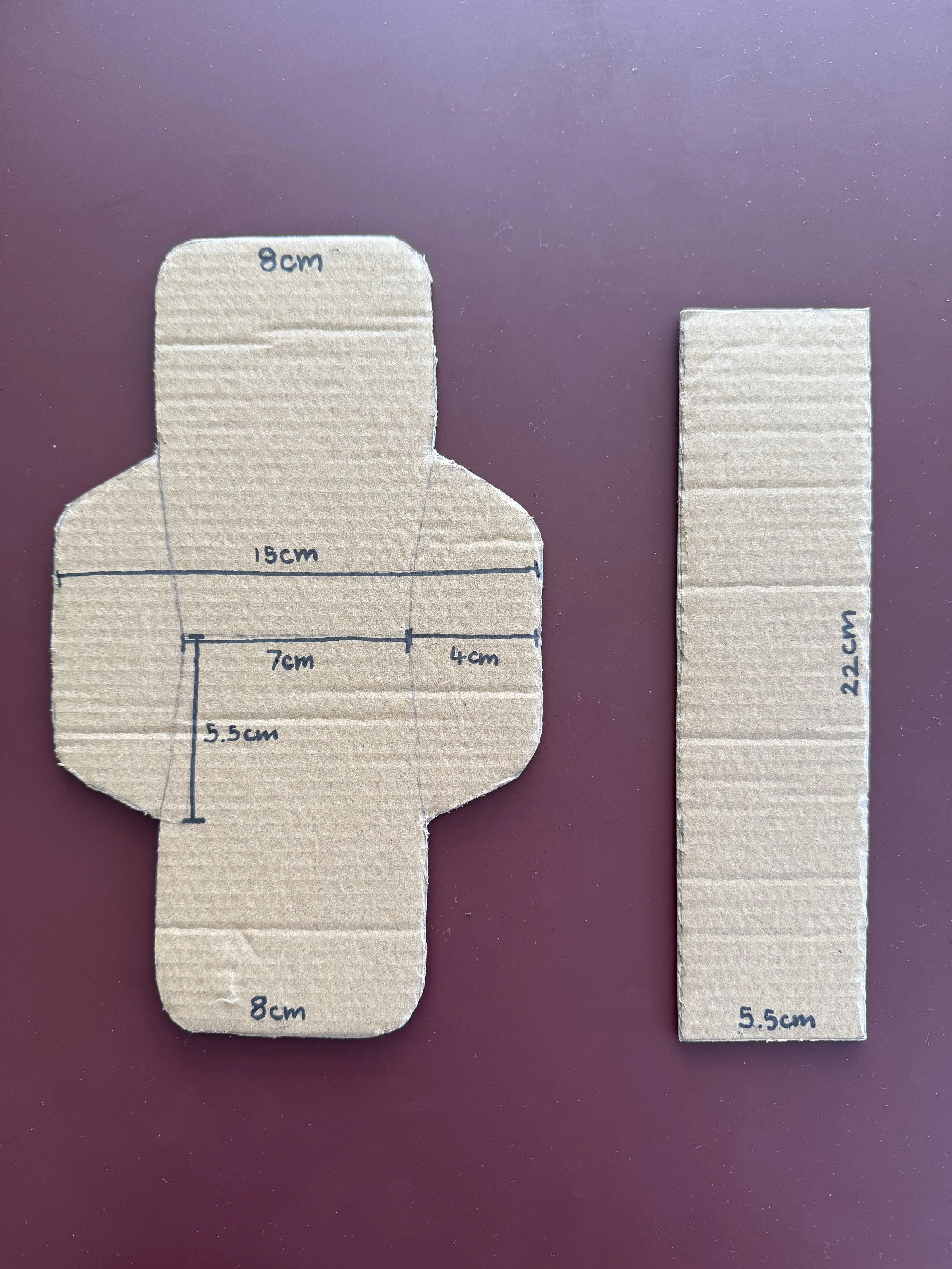
Two thin cardboard templates were created with the following measurements:
Absorbent Core:
Length: 22 cm (8.7 in)
Width: 5.5 cm (2.3 in)
3.
Outer Shell:
Length: 24 cm (9.4 in)
Front width: 8 cm (3.1 in)
Center width: 7 cm (2.8 in)
Back width: 8 cm (3.1 in)
Wing span (open): 15 cm (5.9 in)
These materials were selected as none of them were used in the previous prototype. This way more fabrics could be tested for sewability, comfort and fit, absorbency, and washability. These are also all common household materials.
Creation of cutouts
Each selected material was traced and cut based on the cardboard templates created.
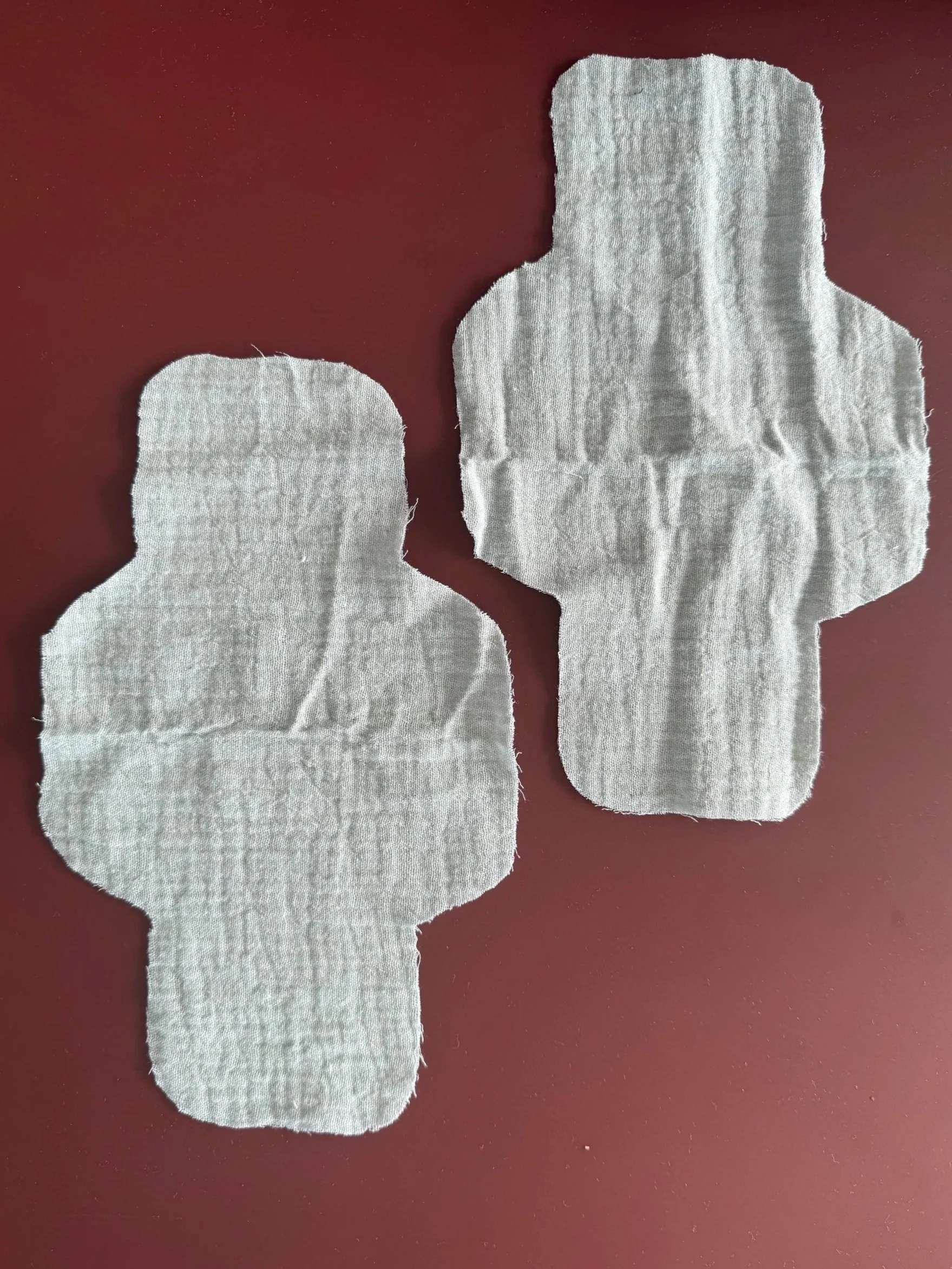
Top Layers
4.
These measurements were selected based on the results on the tests performed on prototype 1.0. The pad was also based on the dimensions and proportions of a standard commercial pad. The design was developed with user comfort in mind while ensuring the wings can wrap securely around a pair of underwear.
Bottom Layers
Absorbent Core
Stitching
The fabric layers were placed on top of one another and stitched together to form the final reusable pad.
A backstitch was used because of its strength and durability. The pad was stitched around the edge of the pad, but not along the absorbent core. The stitches stopped 1cm away from the top edge of the pad
The absorbent core was then removed and the pad was then turned inside out, to hide the edges.
The absorbent core was inserted again, and a basktictch was used along its edges to form a channel for the core. This ensured it stays in place, but can still easily be removed.
The raw top edge was finished with a blanket stitch to help prevent fraying during use and repeated washing.
Both stitches were selected because they are beginner-friendly and can be completed using a simple hand-sewing kit, eliminating the need for a sewing machine or other less common equipment.
Two holes were made on the top edge of the pad: one through the top layers and one through the bottom layers.
A thin piece of fabric used for the top layer was woven through the holes and tied together to close the opening for the absorbent core insert.