
Prototype 1.0
The Process
1.
Selection of materials
Top outer shell: 2 layers of cotton pajamas
Absorbent core: 1 layer of 100% cotton washcloth, 1 layer of 100% cotton muslin cloth
Bottom outer shell: 2 layers of 100% cotton pillowcase
2.
Creation of templates
Two thin cardboard templates were created with the following measurements:
Outer Shell:
Length: 24 cm (9.4 in)
Front width: 8 cm (3.1 in)
Center width: 7 cm (2.8 in)
Back width: 8 cm (3.1 in)
Wing span (open): 18 cm (7.1 in)
3.
Testing
These materials were selected because they are among the most common household items. The two different absorbent core layers were used for variation and to test the user-friendliness of a greater number of materials.
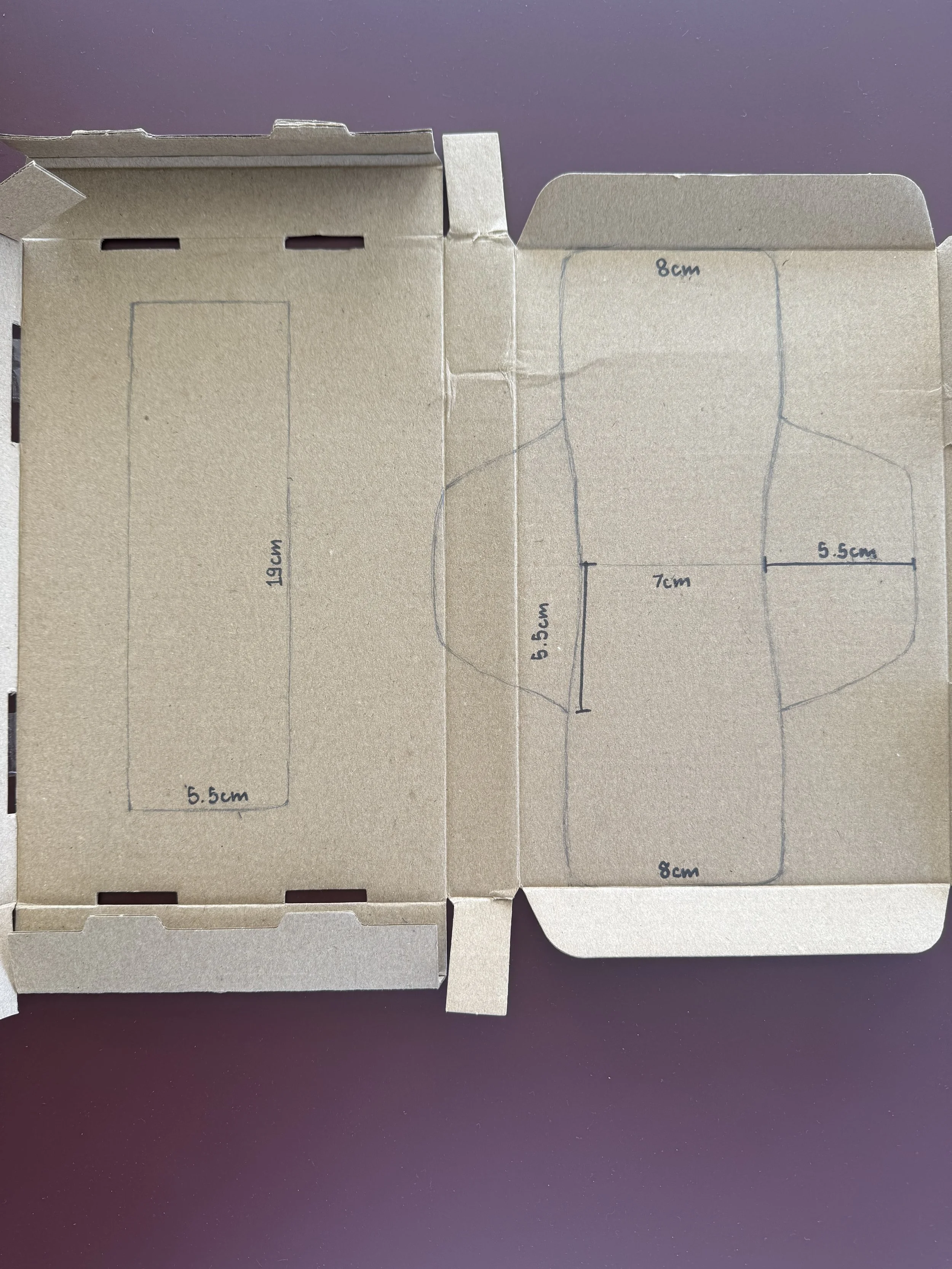
Absorbent Core:
Length: 19 cm (7.5 in)
Width: 5.5 cm (2.3 in)
Creation of cutouts
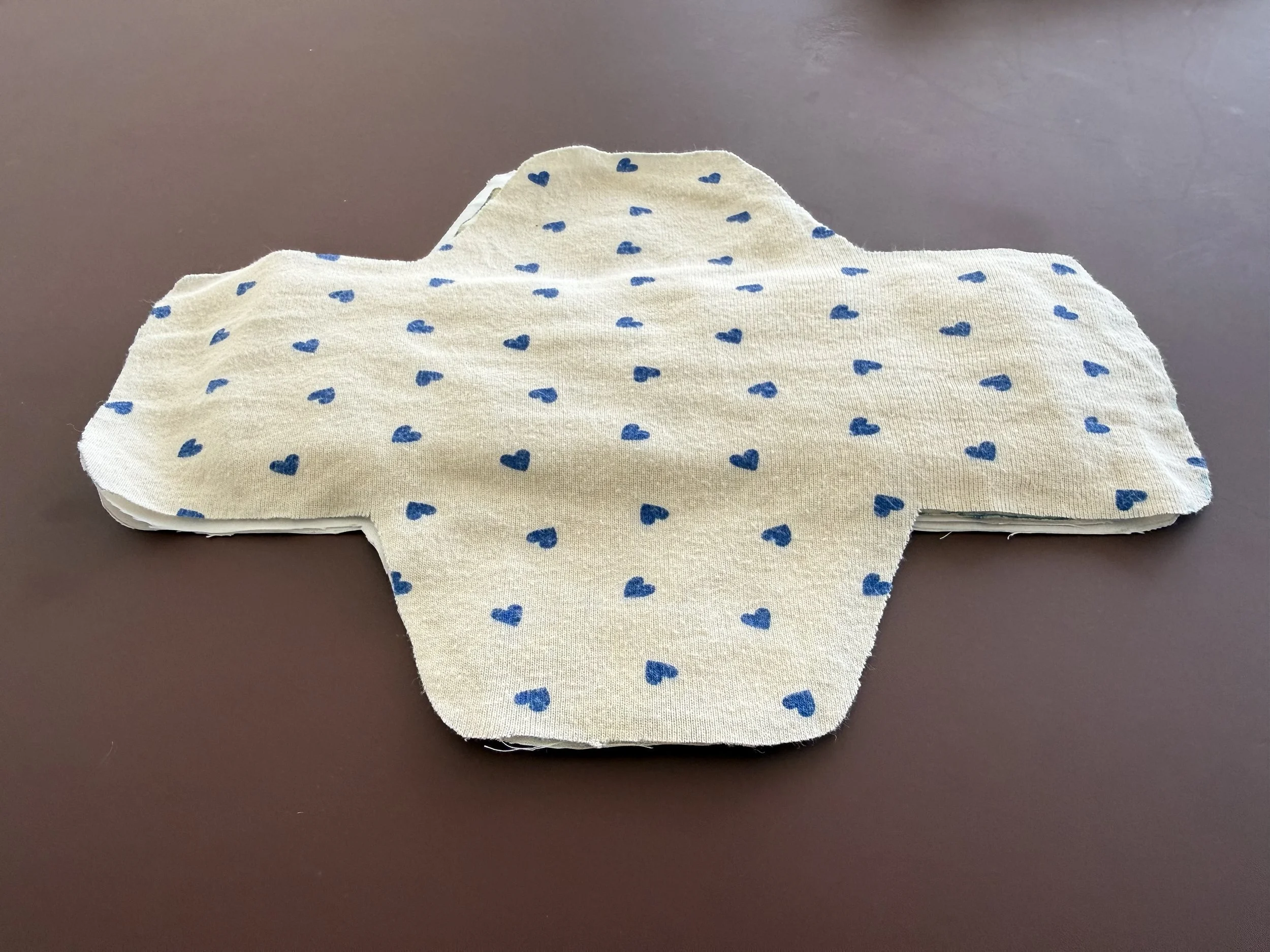
Each selected material was traced and cut based on the cardboard templates created.
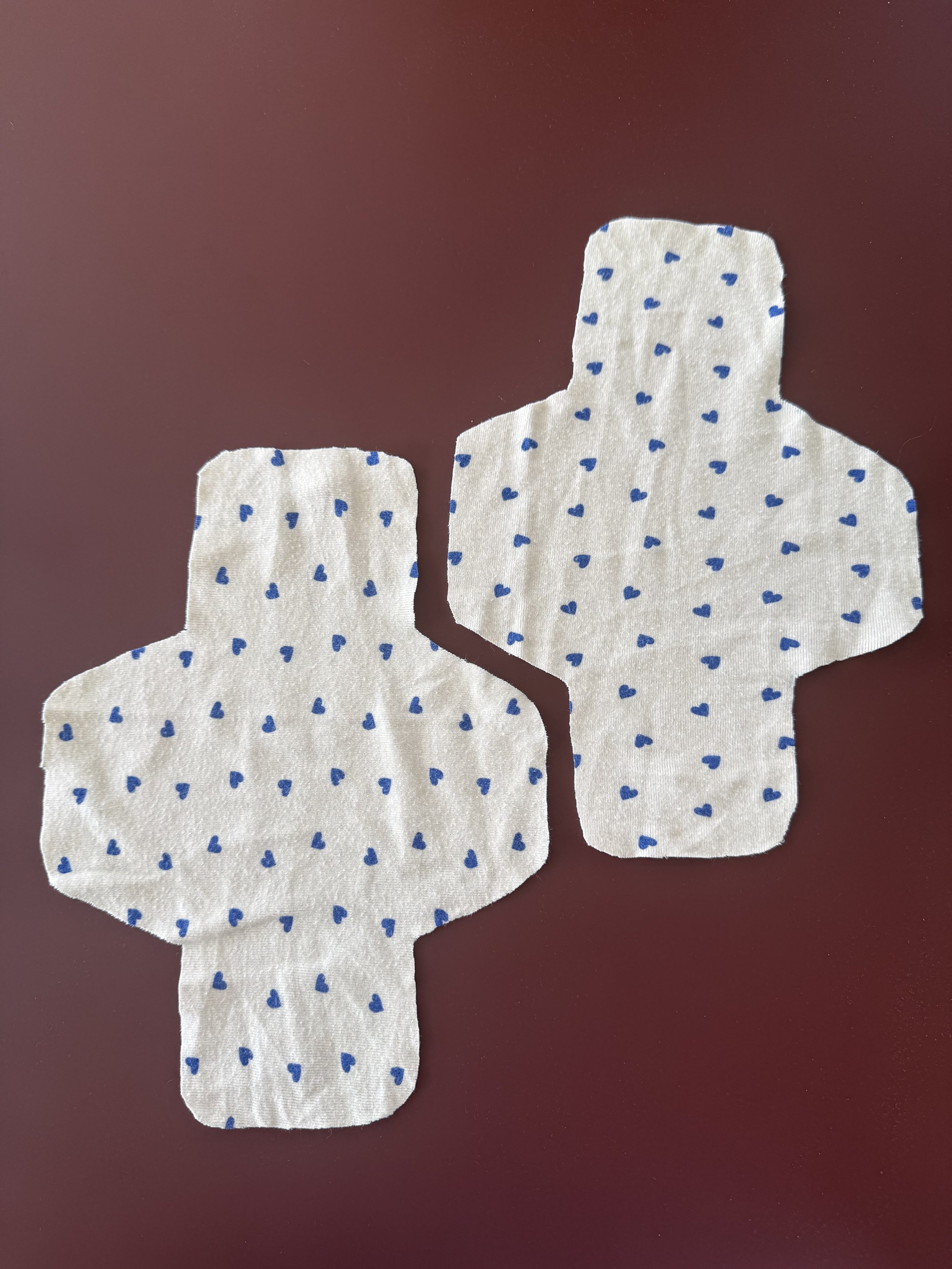
Top Layers
4.
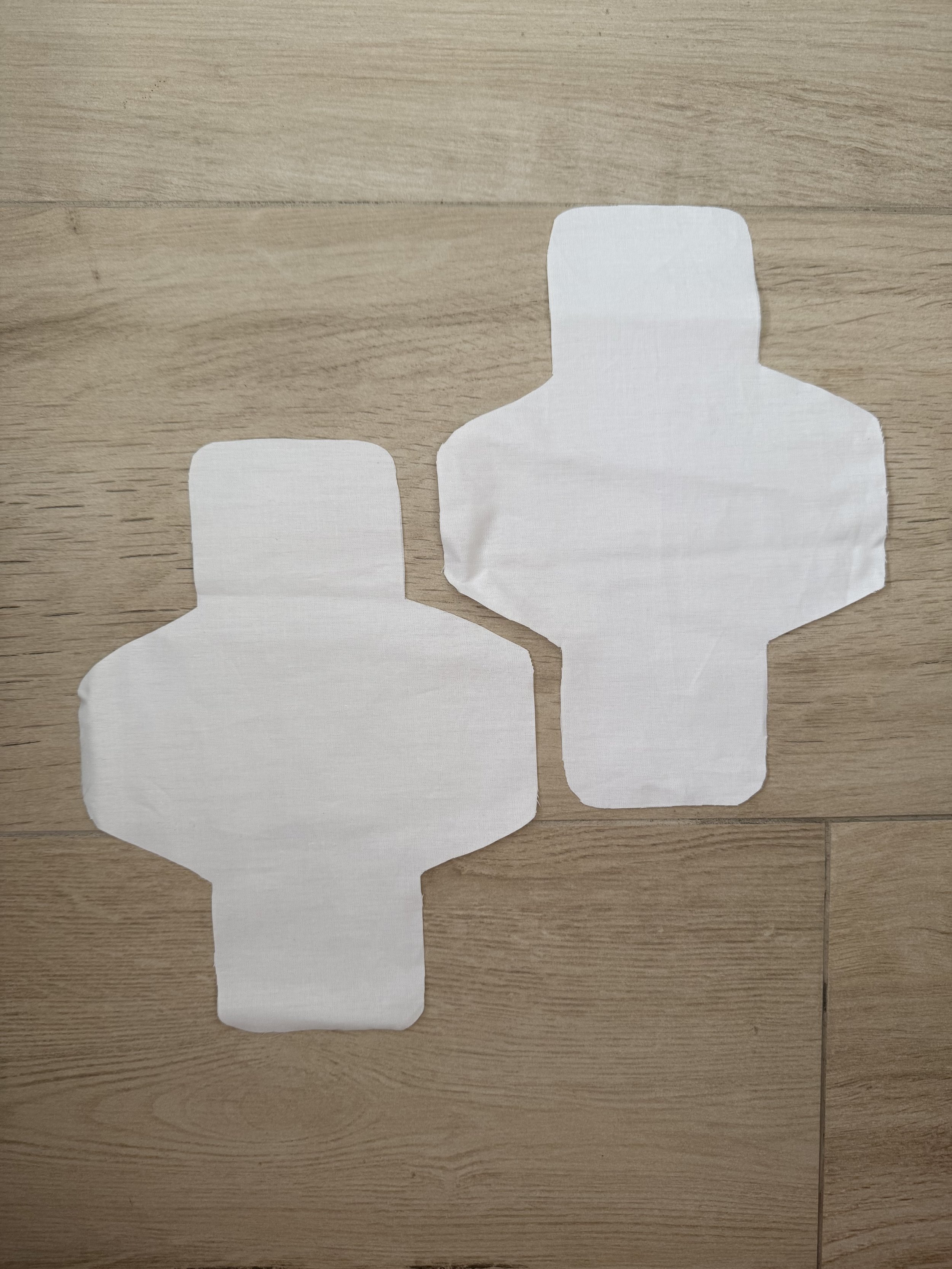
Stitching
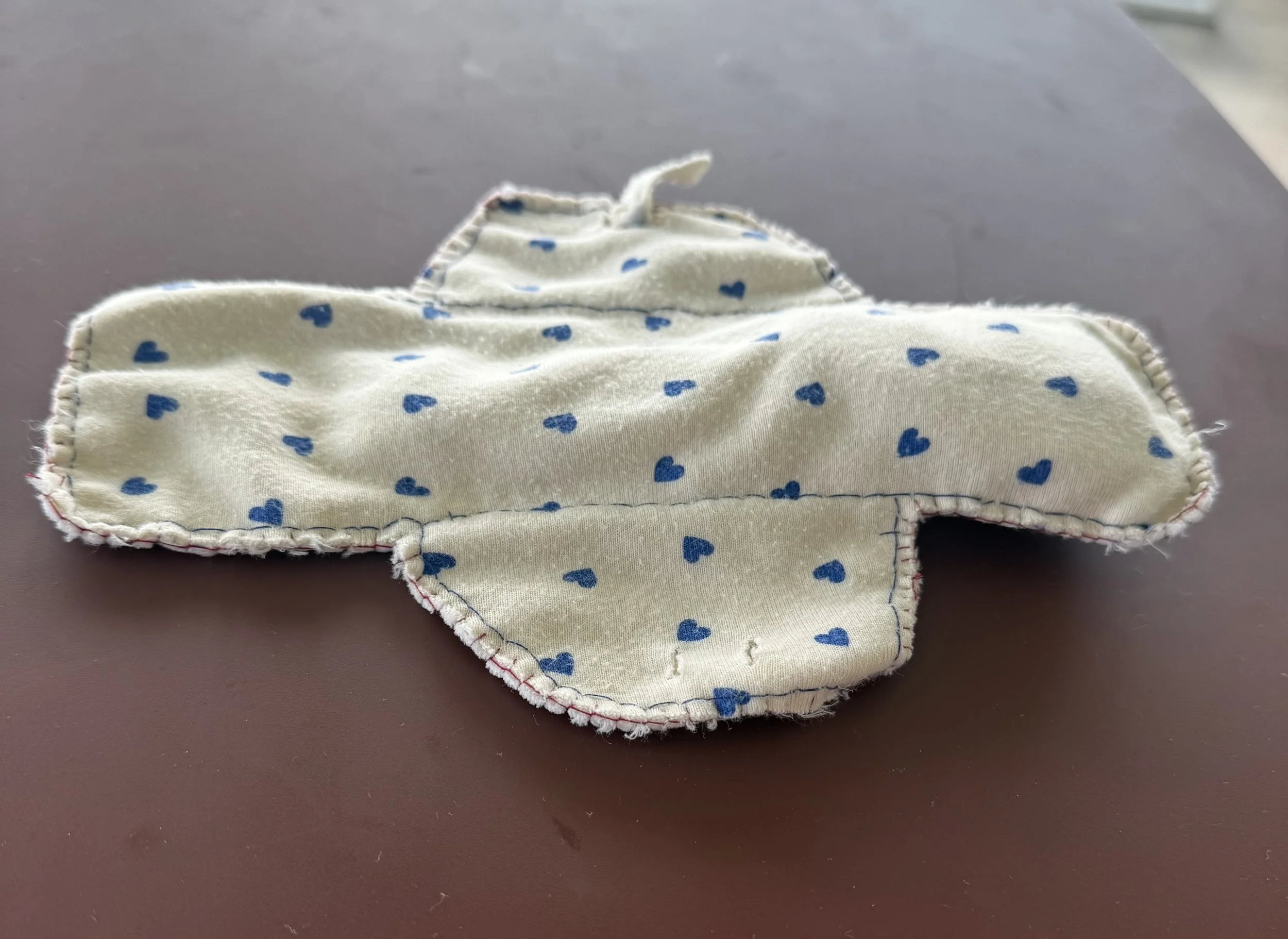
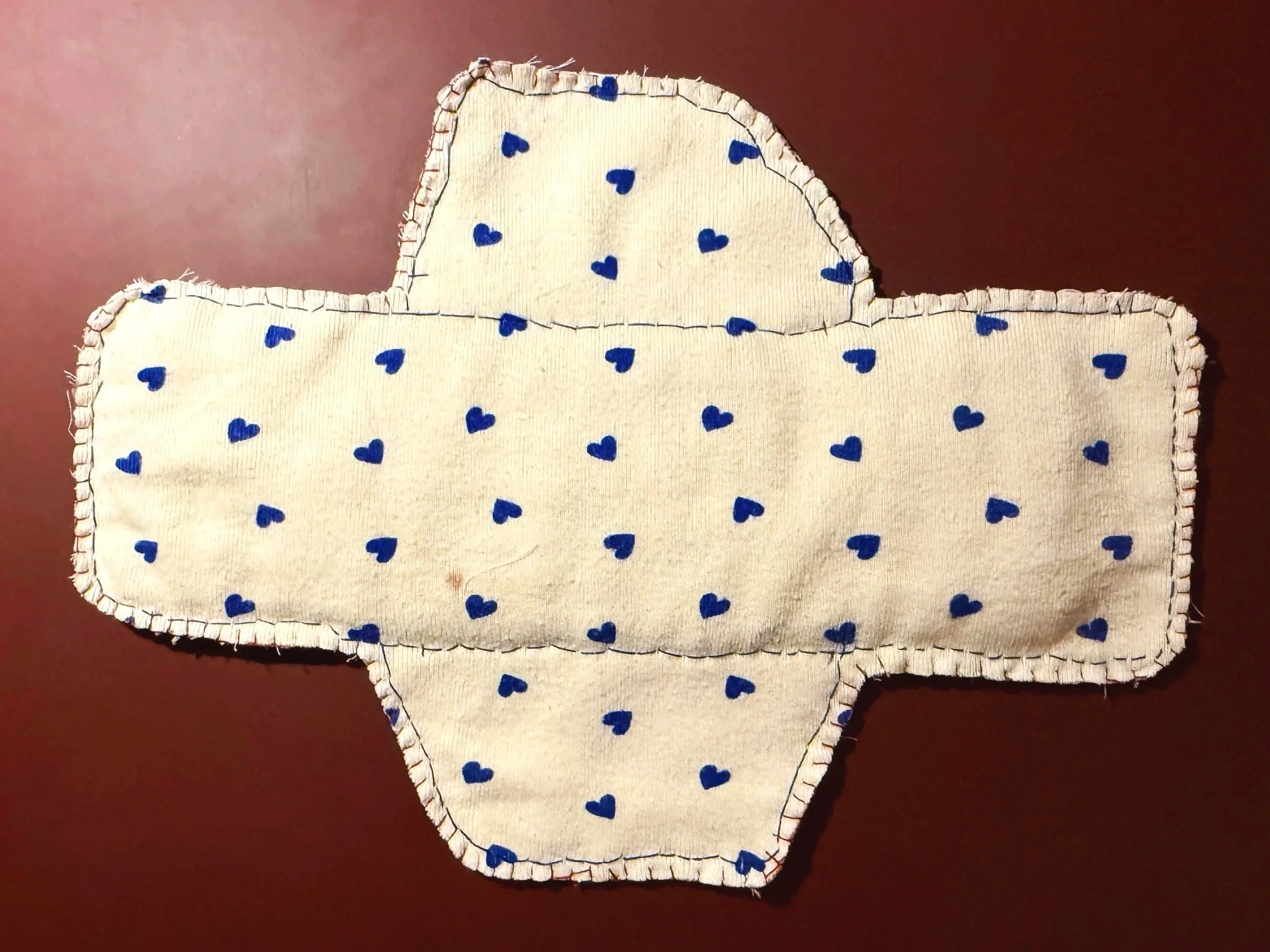
The fabric layers were placed on top of one another and stitched together to form the final reusable pad.
A backstitchwas used because of its strength and durability. The pad was stitched around the absorbent core and along the edges of the wings to secure all layers in place.
The raw edges left by the backstitch were trimmed and finished with a blanket stitch to help prevent fraying during use and repeated washing.
Both stitches were selected because they are beginner-friendly and can be completed using a simple hand-sewing kit, eliminating the need for a sewing machine or other less common equipment.
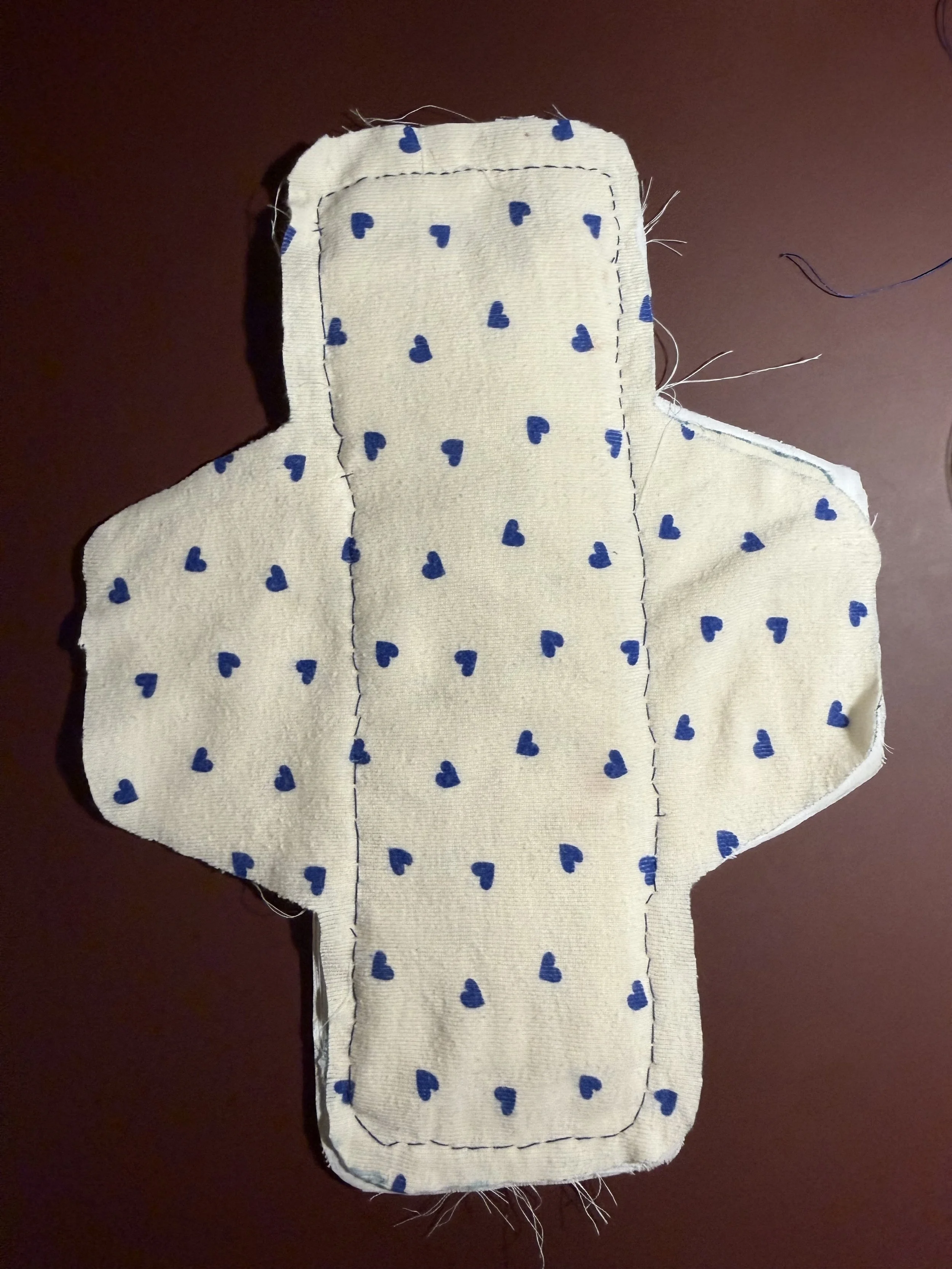
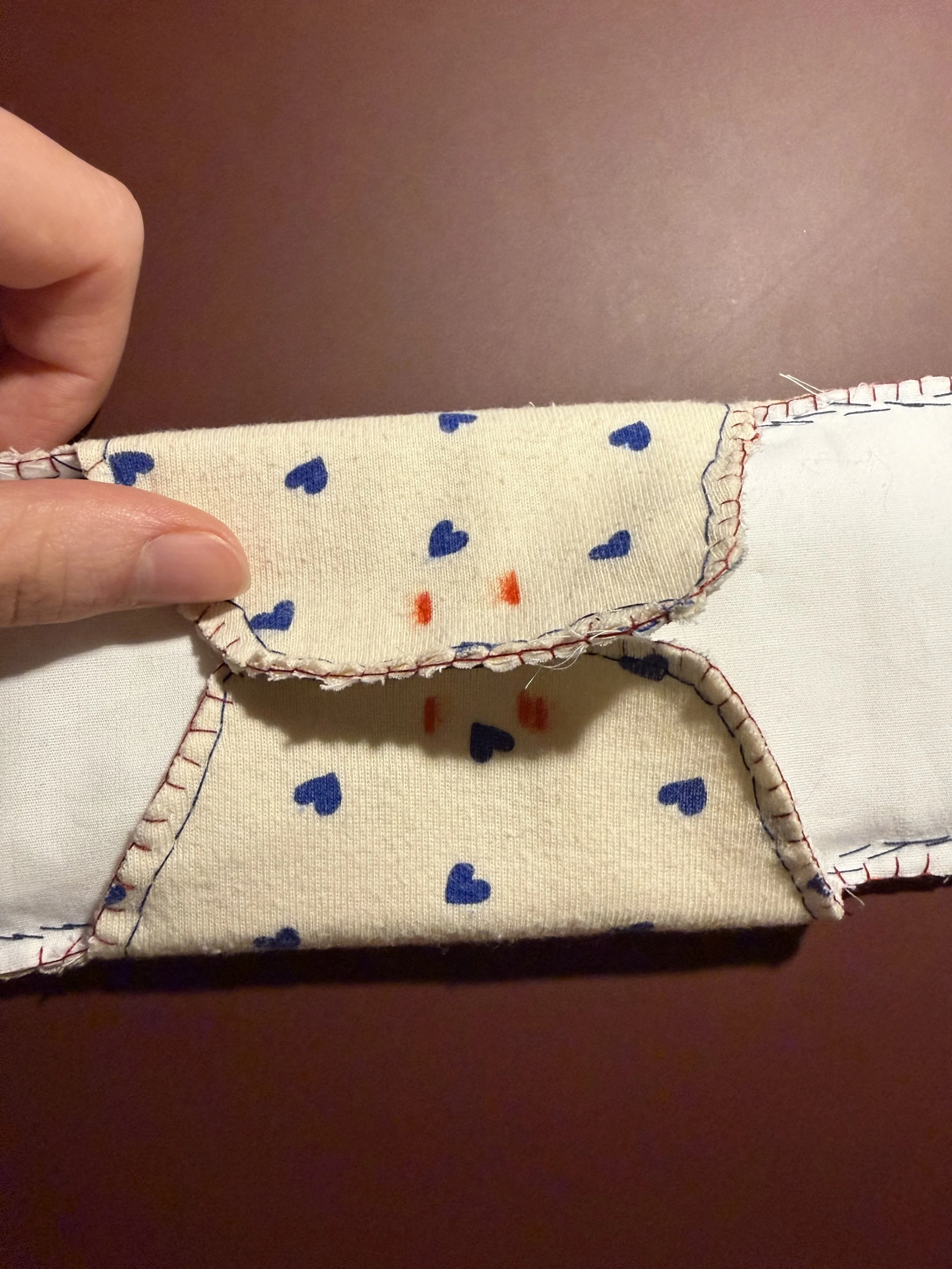
To fasten the pad, two holes were created in each wing. A thin strip of fabric cut from the top-layer material (100% cotton pajamas) was then threaded through the holes and tied, creating a secure fastening that can be easily adjusted and untied for removal.
A washable marker was used to mark the spots for each hole to ensure that they are in the same place on both wings.
1.
Comfort and Fit
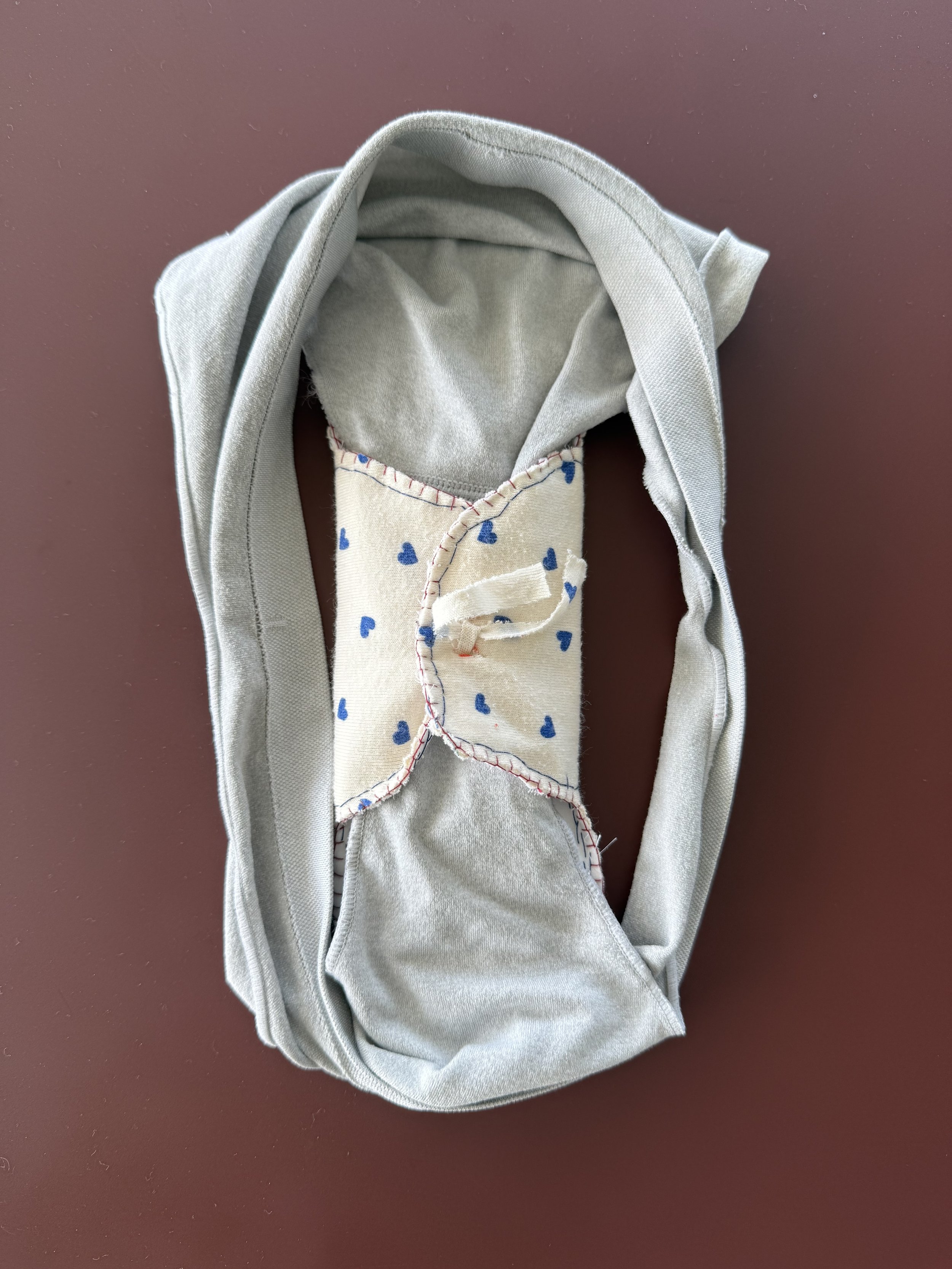
To evaluate comfort and fit, the pad was fastened to a pair of standard brief-style underwear and worn to assess the accuracy of the dimensions, overall comfort, and stability during use.
Observations:
The pad fastened nicely on the pair of underwear with no major visible excess or shortages of material
When tried on, the wings of the pad hung approx. 3 cm lower than the material of the underwear, which can reduce comfort or inadequately suppress leakage
The absorbent core was 3cm shorter than the outer shell, which caused some movement of the inserted materials and could potentially cause leakage or discomfort due to bunching.
2.
Absorbency
To test the absorbency of the prototype, 3 tests were conducted:
Speed of absorption: 5mL of fluid was transferred onto the pad, and the time it took for all the fluid to enter the pad was recorded.
Pressure leakage: 20mL of fluid was transferred onto the pad. Once the water was absorbed, two pieces of paper towel were placed below and above the pad, and the pad was pressed down with a book. The leakage was observed.
Maximum absorbency: A syringe was filled up with 50 mL of fluid. It was transferred onto the center of the pad, which lay on a piece of paper towel. The paper towel was checked for leakage every 1 mL of fluid. Once leakage was observed, the flow stopped.
Observations:
Speed of absorption with 5mL: 4 seconds.
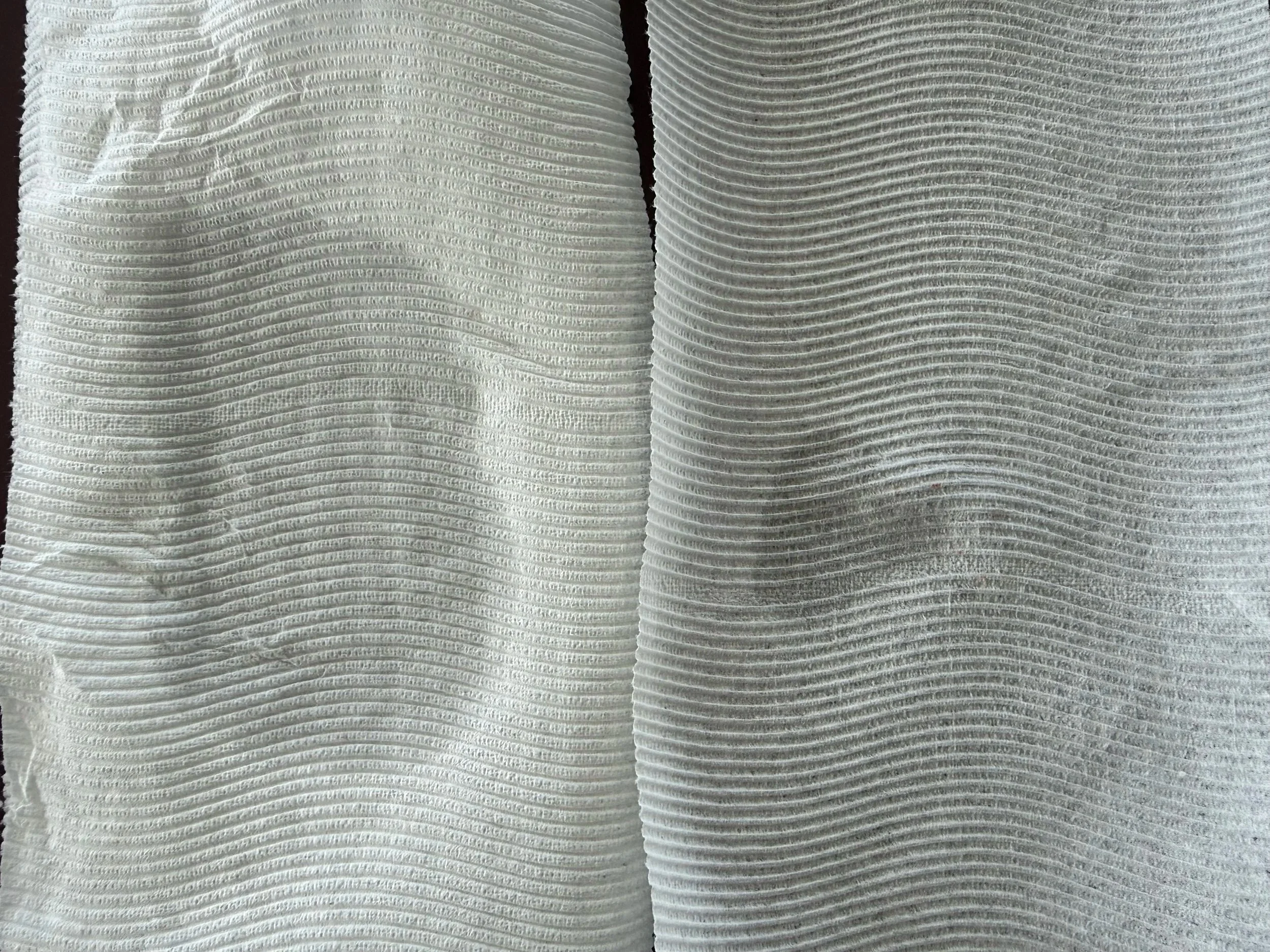
Pressure leakage: A significant amount of fluid was observed on the top paper towel, but very little was transferred onto the bottom paper towel. The bottom leakage came from the side of the pad, not the center.
The pad absorbed 13 mL of fluid.
3.
Drying Time
The fastened pad was completely soaked in water and left out on a flat surface in a room-temperature, indoor area. The time it took to completely dry was recorded.
Observations:
Drying time: 18 hours.
4.
Future Improvements
Bottom Layers
These measurements were selected as a starting point to create a pad with dimensions and proportions similar to those of a standard commercial pad. The design was developed with user comfort in mind while ensuring the wings can wrap securely around a pair of underwear.
Two types of stitches all the way around the pad → Only backstitch all the way around + a small section of the blanket stitch
More beginner-friendly, reduces sewing time
Make the cutout for the absorbent core longer.
Prevents insert movement, absorbs more fluid
Make the wings shorter.
Offers a tighter, more comfortable fit around your underwear, prevents leakage
Make the absorbent core removable.
Decreases drying time, prevents bunching of material, and the opening in the pad allows for only one stitch to be used
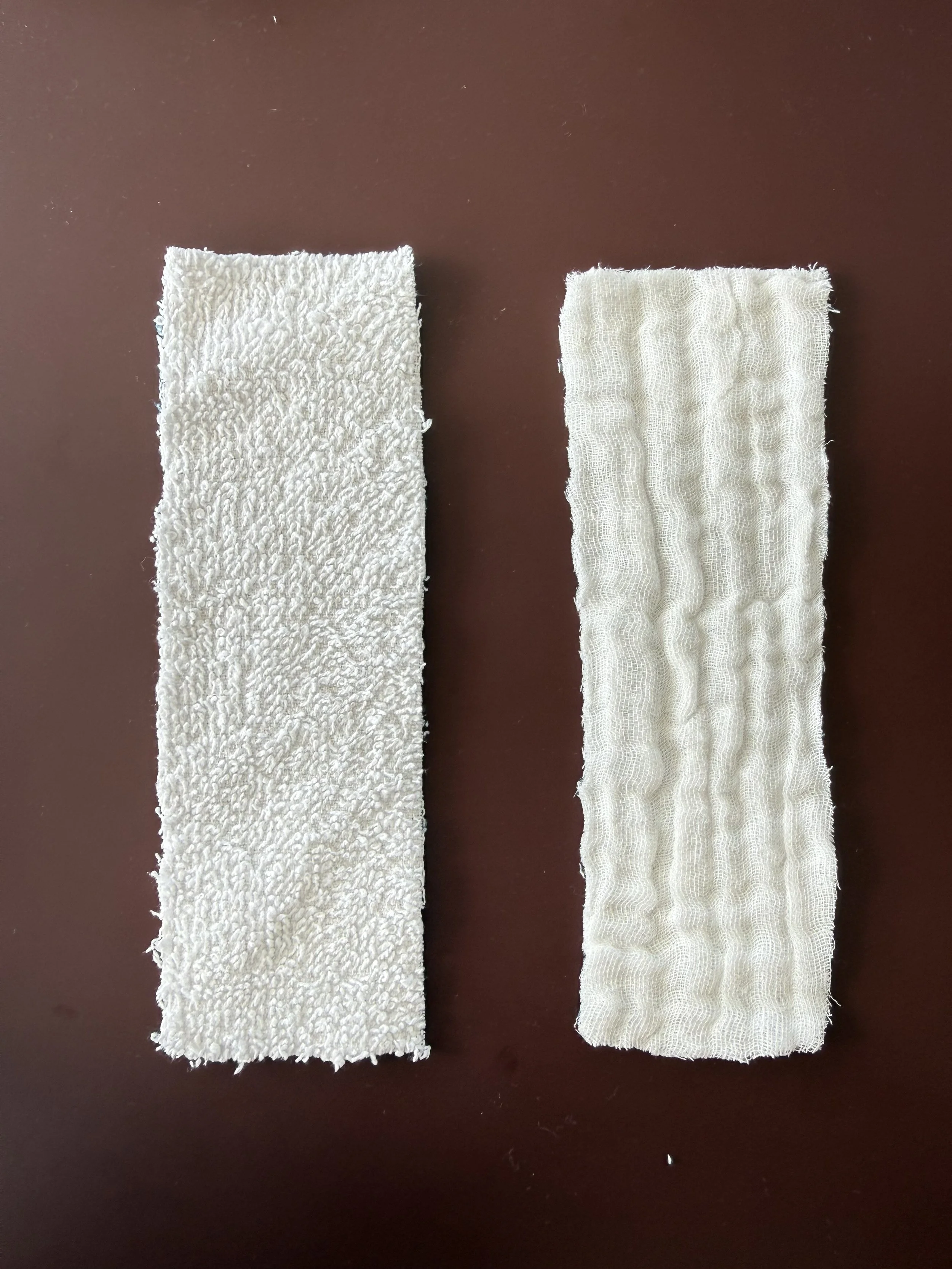
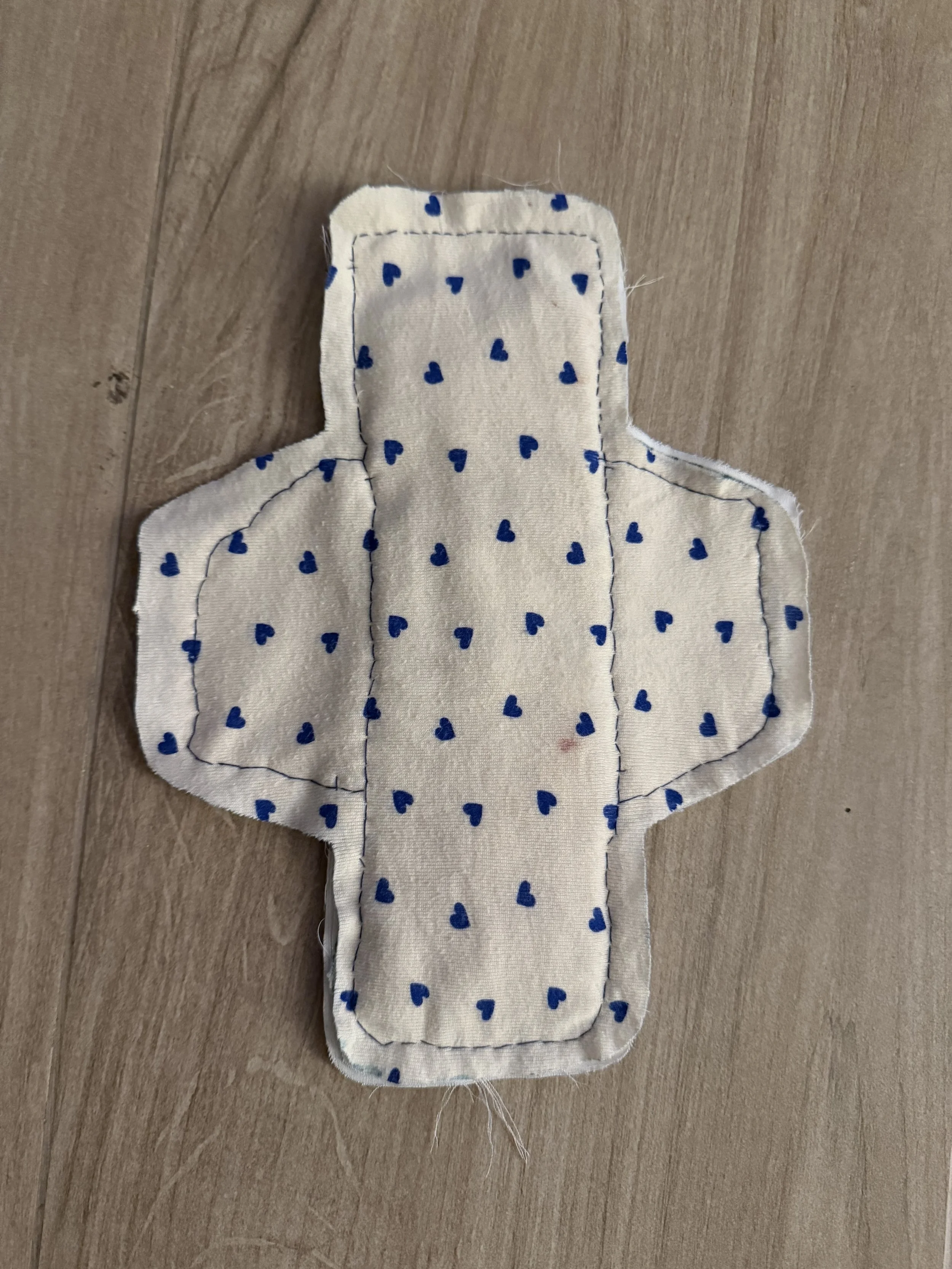
Absorbent Core
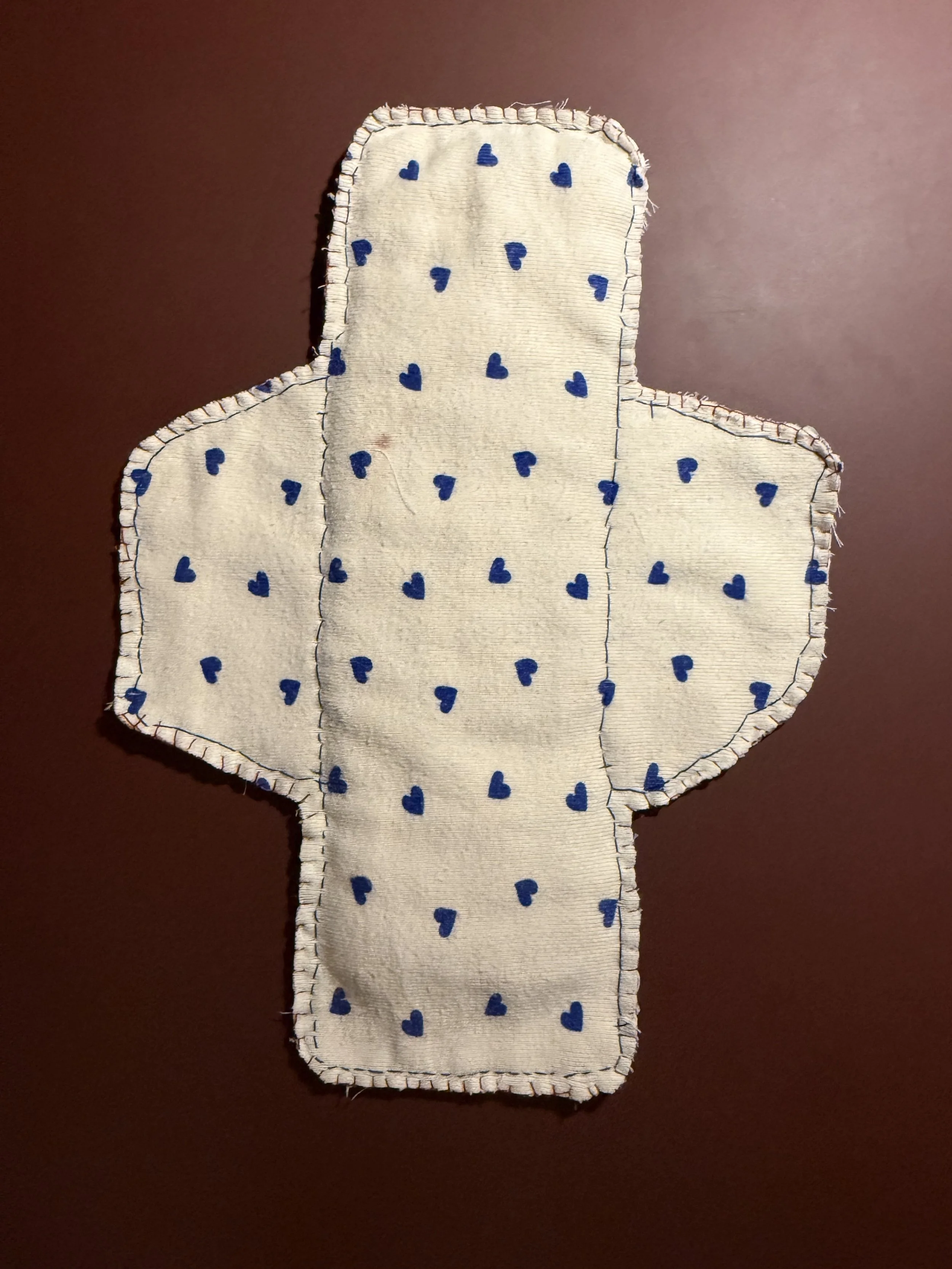
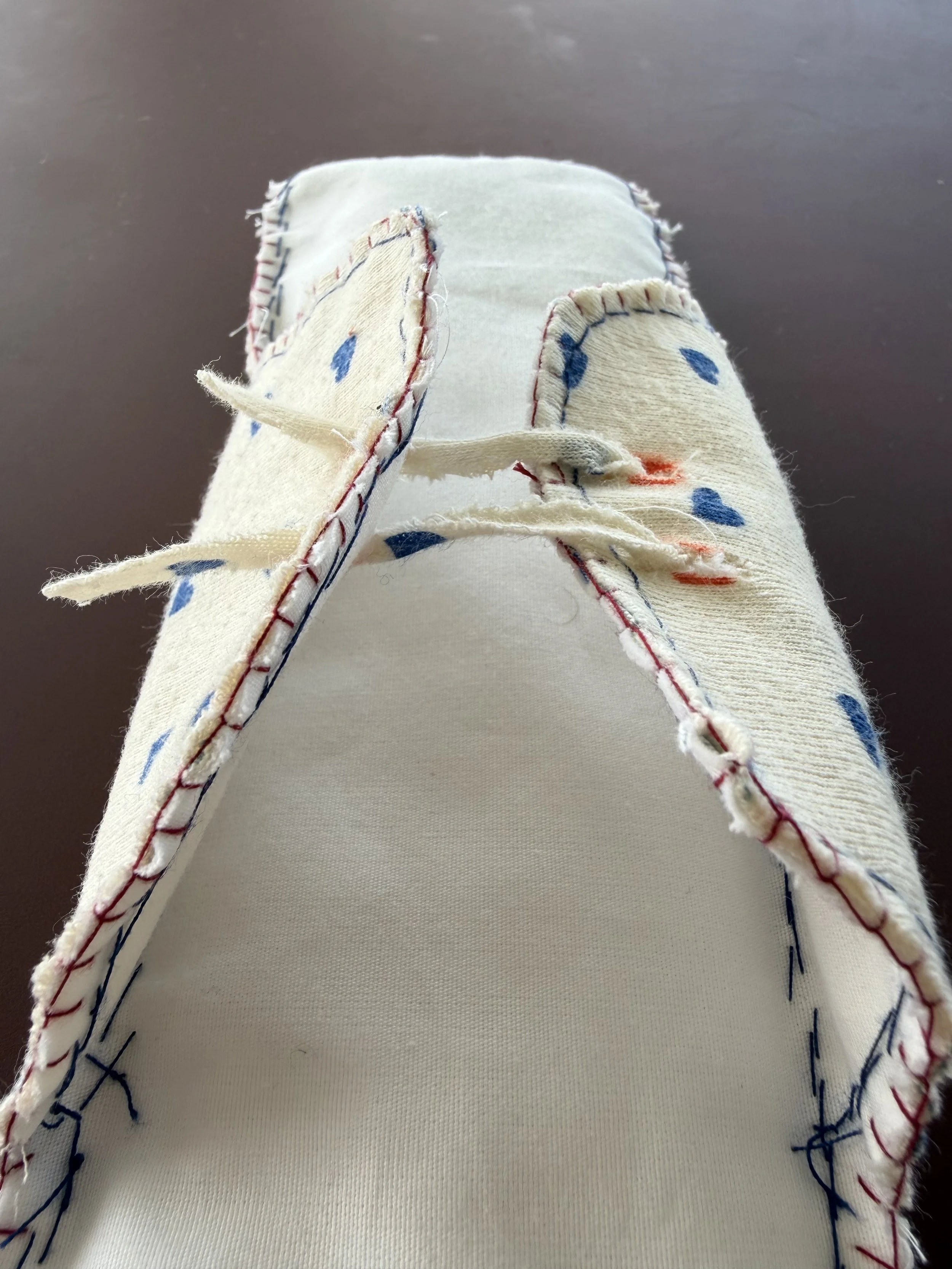
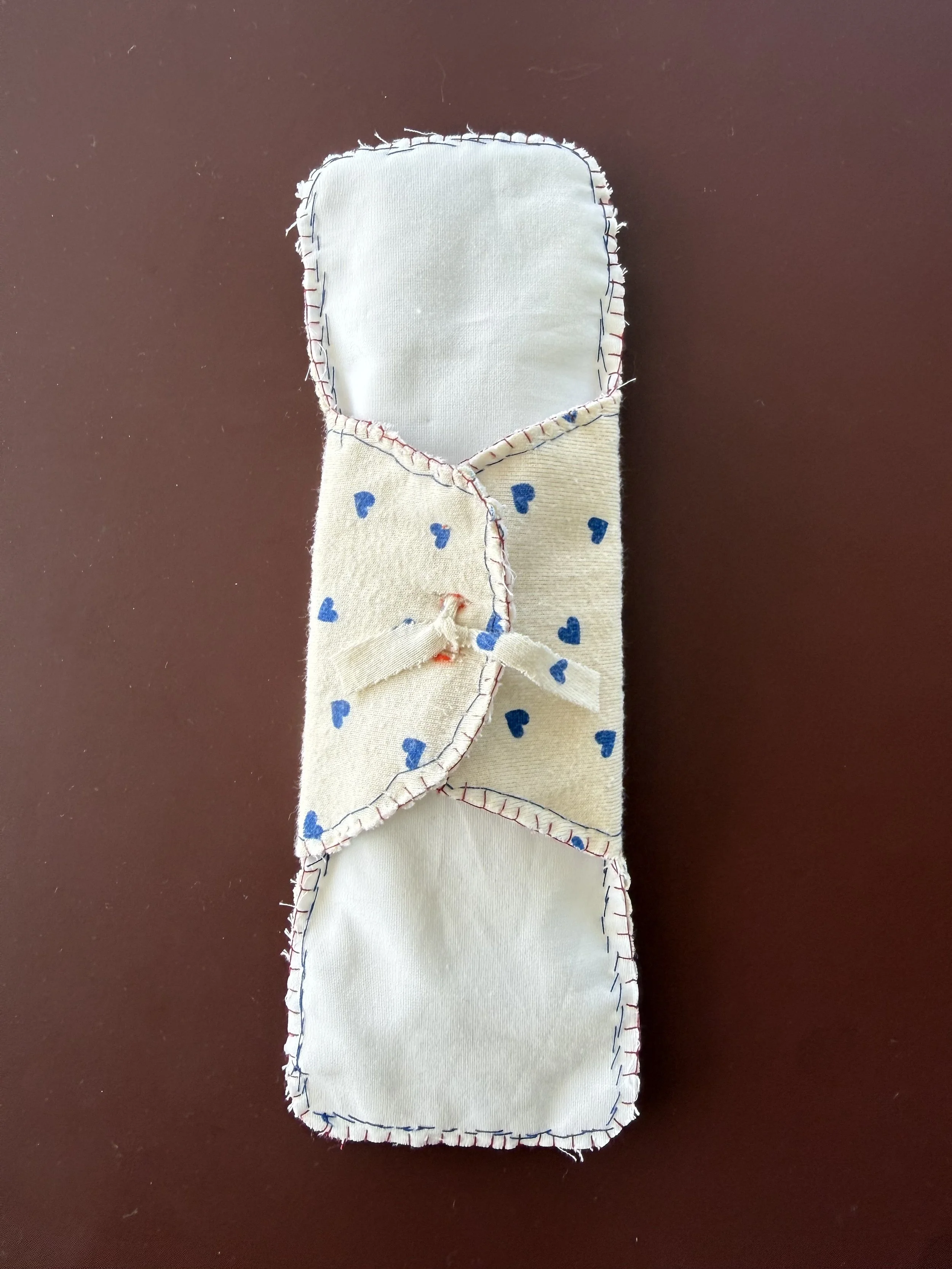
A series of tests was performed to investigate the pad’s fit, absorbency, comfort, drying time, and washability. These were necessary to discover the changes that should be implemented in future prototypes.
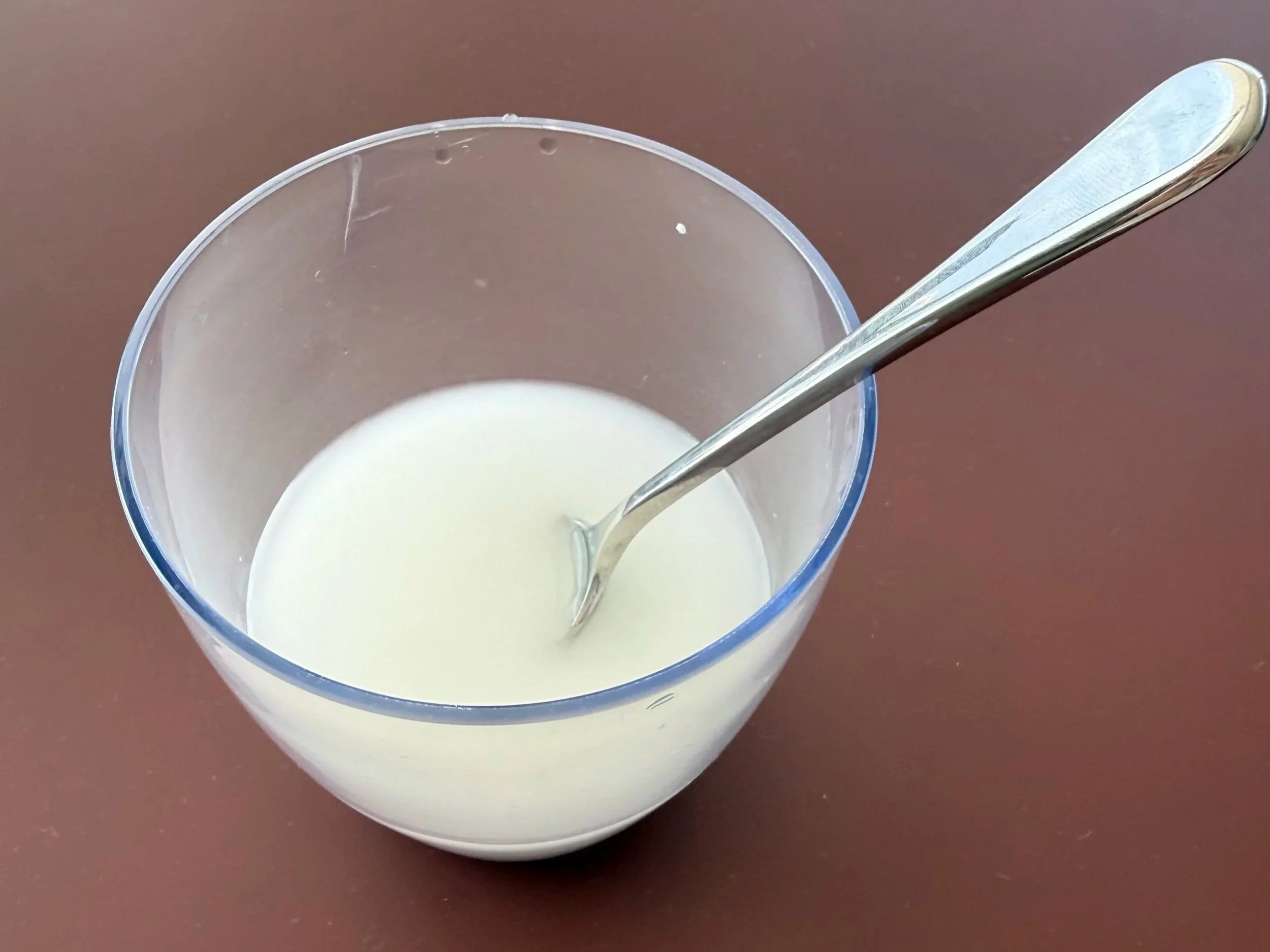
The fluid used to test for absorbency was made by mixing 1 tsp of cornstarch into 100 mL of water. This increased the water’s viscosity, making it more similar to period blood
Washability
The pad was washed in a standard washing machine at a normal setting and observed for changes. It was then dried in an electric dryer and observed for changes.
Observations:
The pad retained its shape and size.
There was no fraying or damage to the material.
The absorbent core shifted to one side of the pad, bunching into a large bump.